Tuesday, 8 March 2011

The Alcazaba, Almeria

After spending the night parked on Almeria's waterfront we've walked back into the city today to visit the Alcazaba.


The main gate into the fortress. The Moorish influence is very obvious.


The interior is in three sections; the first built around 1000AD used to be full of houses but is now a lovely garden full of ponds, fountains and waterfalls.


Moving water everywhere...


Looking through an interior wall into the second part of the fortress. This area is still being excavated so looks more like an archeological site.

The third part of the fortress is a Christian fort which was built around 1600AD.


Em poses in front of the Western Tower.


Through the arched window!

Monday, 7 March 2011

Almeria

We left the campsite on Cabo de Gata this morning and having "rounded the corner" began our journey westwards along the southern coast of Spain. We drove to Almeria and parked next to some other motorhomes in a carpark on the outskirts of the city right next to the sea.

Almeria's waterfront is dominated by the commercial ferry port.


We cycled the 3km into the city and went in search of the Alcazaba, the large fort that sits above the city. Unfortunately it's closed today as it's Monday so we'll come back tomorrow.

The cathedral in Almeria looks more like a castle as it was solidly built to withstand attacks fron the Berber's.

Sunday, 6 March 2011

A Volcano and a Gold Mine

This morning we're exploring a volcano caldera - the inside of a collapsed volcano.


We rode our scooter from the campsite to the start of the walk and then followed a dried up riverbed into the hills.


Em surrounded by the walls of the volcano


After lunch back at the campsite we rode in the opposite direction to the coast where we found a very lumpy sea as a result of the high winds we're had over the past few days.


Further along coast we discovered the disused gold mining village and processing plant of Rodalquilar. Unfortunately there didn't seem to be any gold left lying around!

Saturday, 5 March 2011

In search of the Lighthouse

The dirt track continues all way round the cape but the last few miles are pedestrian only so we parked our scooter and continued on foot.


The lighthouse at the end of the Cabo de Gata


More flora

Cabo de Gata

This morning we drove the short distance to a campsite on the Cabo de Gata where we have decided to stay for a couple of days so we can explore the area in more detail.
Having parked Kiki and had an early lunch we set out on our scooter towards the end of the cape.

A restored donkey-powered waterpump


Looking back along the coast - San Jose is over the lump in the distance. This stretch of coast is national park so no development is permitted.


Spain has had higher than average rainfall this winter and there are wild flowers everywhere.


Nothing to see for miles......

Friday, 4 March 2011

Do you know the way to San Jose?

After looking around Agua Amarga we continued south to San Jose on the Cabo de Gata. We drove along a dirt track to the beach of Los Genoveses where you used to be able to stay overnight in a motorhome. Unfortunately overnighting is now forbidden so we returned to San Jose and spent the night in the municipal carpark.


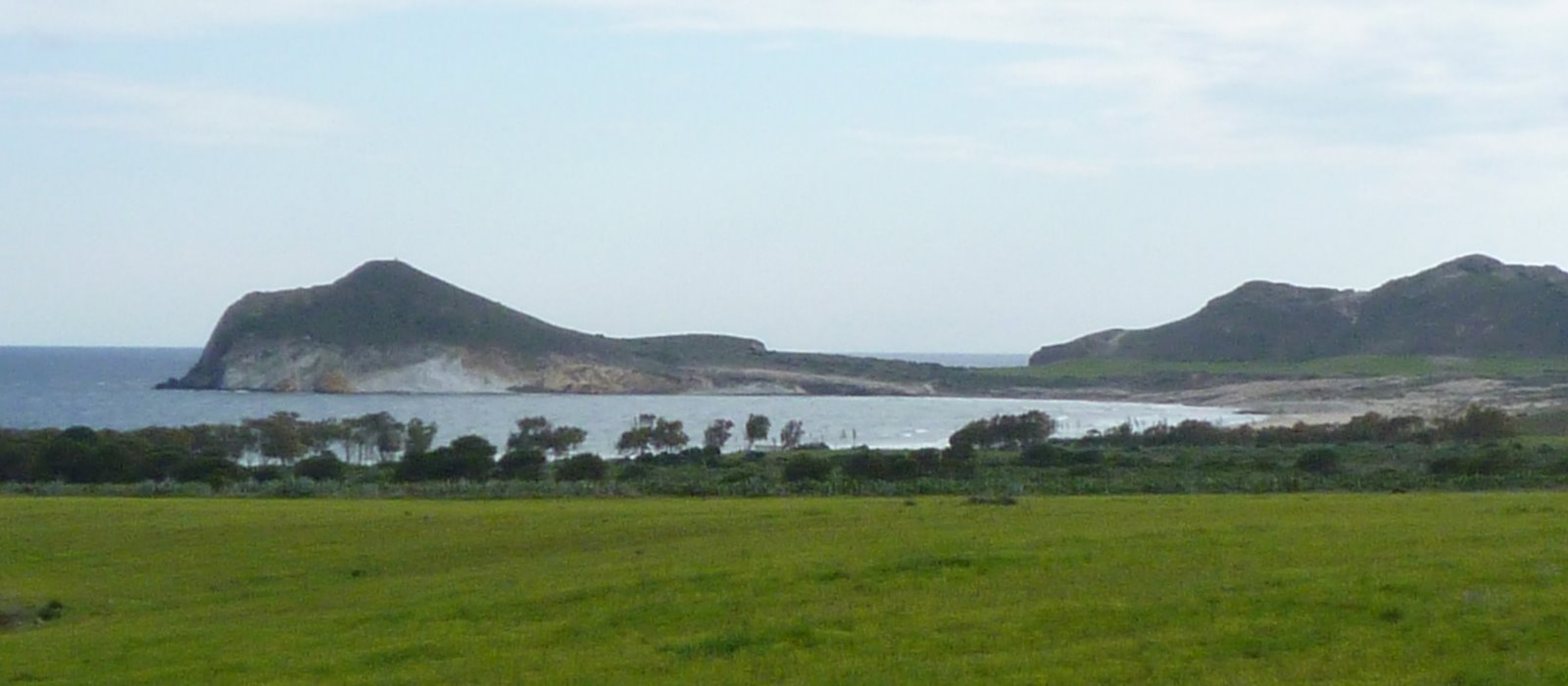
The beautiful, wild, unspoilt beach of Los Genoveses


A restored windmill near San Jose

Agua Amarga

We left the campsite in Mojacar this morning and drove south to Agua Amarga.


A small resort nestled between two headlands


Cave dwellings... what has Em got for sale today?


Thursday, 3 March 2011

Cuevas de Sorbas

We finished our day at the Cuevas de Sorbas which are gypsum caves deep in the Sierra Cabrera mountains.


We each had a helmet with a light attached and followed our (I only speak a little English - ie: fluent) guide through the caves for nearly two hours.


Some places were quite tight - hands and knees here!


Another tight squeeze - Em managed to get dirtier than the two kids in our group :-0

I'll just move this rock a little to the right....

Arizona in Spain

After visiting Bedar we continued inland amongst landscape which we thought looked like a miniature version Arizona.


The town of Sorbas

Bedar

Today we're visiting Bedar which is another of the pueblos blancos (white villages) so typical of this part of Spain. We're out on our scooter again as there's no way we could get Kiki near, let alone into this village as it lies high up in the Sierra Cabrera mountains along some winding torturous roads.


Bedar has a strong mining heritage symbolised by this statue in the main square.


Wednesday, 2 March 2011

Plaza del Torros Vera

After coffee (and doughnuts) in Mojacar Playa we went to visit my former neighbours in Cabuzzana on the outskirts of Vera. After another coffee and a little remeniscing we headed into Vera to see the bullring.


Newly refurbished, the bullring looked very different from the run-down place I remembed from my last visit in 2005. 


Capes of the famous matadors in the museum

Tuesday, 1 March 2011

Deserted Beaches

We continued along the dirt track (pictured below) until it came to an end at a deserted beach.


Rocks hewn by the wind and sea


On our way back we stopped to check out an old Spanish castle

The Spanish Tower

After a late lunch we headed down to the coast on our scooter. We drove south from the main beach area along a bumpy dirt track until we came to a tower which has recently been restored.


I'm the King of the Castle


Em made it to the top - Mojacar Playa (beach) is the white blob in the background.


Mojacar Pueblo

We are now staying on a campsite close to Mojacar Pueblo (village) which is a typically white Spanish village tumbling down a hill.


Winding, narrow streets make this a fun place to explore


Distant glimpses of the sea


The strong Moorish influence is obvious here


The view across the plain to the mountains in the distance. This pic was taken from high up in the village.

Mine Workings

After a peaceful night parked above the beach we drove on towards the campsite in Mojacar where we planned to stay for a few days.


We stopped for coffee by some old mine workings - I think they were iron as we found some large heavy lumps of "rock" (iron ore?) that had been discarded.